Manush, tumi emon keno?
We can stop for a bird, hold an umbrella over a stranger and enter a river to save a life. We can also humiliate, hurt and kill. The distance between those two versions of us is sometimes painfully small.
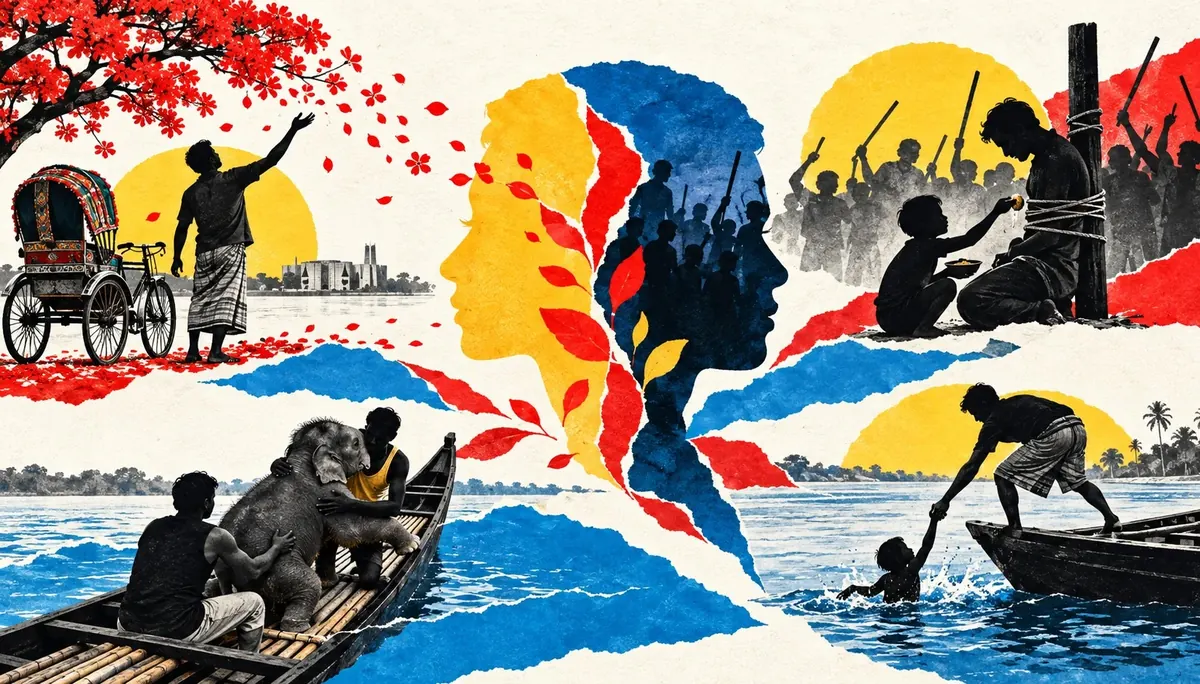
A rickshaw puller was moving along an ordinary road when he suddenly stopped beside a flowering tree. He got down, picked a few flowers and threw them into the air. For a few seconds, he watched them fall. Then he climbed back onto his rickshaw and went on.
That was all.
No one was in danger. There was nothing to gain.
A tired man simply saw flowers and wanted to enjoy them.
I do not know why that small moment stayed with me.
Maybe because we are too used to seeing people only through what they do. Rickshaw puller. Driver. Passenger. Labourer. Poor man. Victim. Accused.
We forget there is a whole person behind every label.
There are other moments that stay in the same way.
A rickshaw puller pedals through heavy rain. The passenger behind him holds an umbrella over his head.
An elderly rickshaw puller struggles through the heat. The passenger inside points a small electric fan towards him. Such small acts. No speech. No big gesture.
One person simply notices that another person is suffering, and tries to make it easier. And then there are people who stop for lives that cannot thank them.
Men go into a river to save an elephant calf being swept away by the current. Border guards pull a family, including a tiny baby, from dangerous water.
A driver stops in the middle of a busy road because a pigeon is trapped in thread. Cars pile up behind him. Horns keep sounding. He keeps trying until the bird is free.
The pigeon will never know his name.
Still, he stops.
Maybe that is what touches me most.
The stopping.
We are all in a hurry. We have work, bills, traffic and worries of our own. We learn to move past things.
Then someone stops.
For a bird.
For an animal in the river.
For a stranger.
For the man pulling his rickshaw.
And for a moment, the world feels softer.
But people can be cruel too.
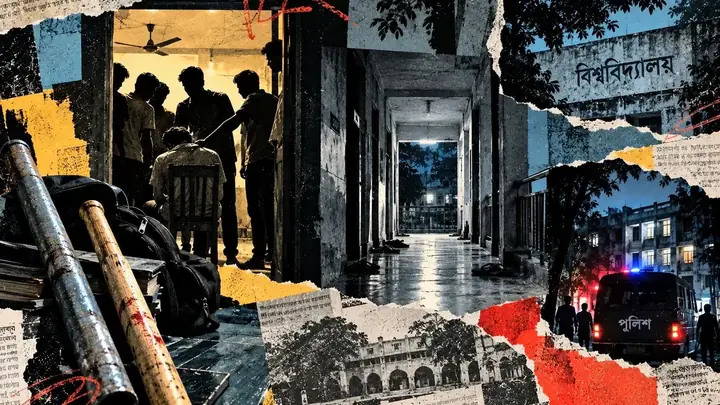
Recently in Barishal, a man accused of theft was beaten and tied to a pole. The next morning, his nine-year-old daughter came to him. She sat beside her father, dipped bread into tea and fed him.
Adults had tied him there.
A child fed him.
Cruelty and love stood side by side.
Then there was Mohammad Faysal in Moheshkhali.
He was tied to an electric pole on suspicion of theft. His hands and feet were bound. Bricks were placed on his shoulders. People beat him. He later died.
I watched that video and kept thinking: what could he possibly have stolen that was worth his life?
But someone could have said, enough.
Someone could have called the police.
Someone could have remembered that the man tied in front of them was still a human being.
No one did in time.
And that is hard to accept.
The same human being who can hold an umbrella over a stranger can also hit someone who cannot defend himself.
The same society that stops traffic for a pigeon can also stand around while a man is beaten.
A woman can go out to feed stray dogs and return with bruises. How do we carry so much kindness and so much cruelty at the same time? I do not know.
Some days, people make me lose faith in people. Then someone does something so simple and kind that I have to look again.
A hand holding an umbrella.
A fan pointed towards a tired old man.
Someone jumping into a river.
Someone freeing a bird.
Someone feeding a father.
And somewhere, a rickshaw puller stopping beside a tree because the flowers were beautiful. Maybe that is why I keep returning to him.
After everything people are capable of doing to one another, there was still a man who stopped working for a few seconds because he saw flowers. He threw them into the air, watched them fall, and went back to pulling his rickshaw.
Manush, tumi emon keno?
I still do not know whether I ask that out of pain or love. Most days, probably both.