‘Culture is not easy, it’s political as well as artistic’
The crisis facing cultural practice in Bangladesh is not only about obstacles to artistic endeavours but also about a deeper struggle over how society understands its own history, identity and the relationship between culture and religion, speakers at a discussion said yesterday.
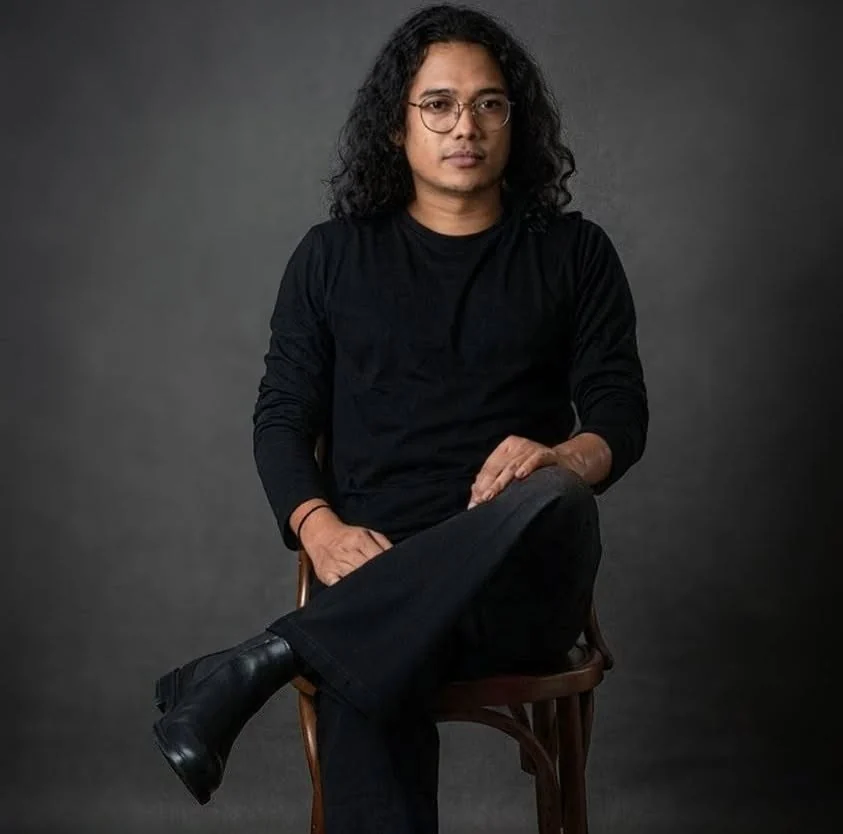
The crisis facing cultural practice in Bangladesh is not only about obstacles to artistic endeavours but also about a deeper struggle over how society understands its own history, identity and the relationship between culture and religion, speakers at a discussion said yesterday.
They called for greater dialogue, critical engagement and a broader understanding of culture beyond performances and artistic expressions.
The remarks came at the 27th episode of The Daily Star Itihash Adda held at The Daily Star Centre in the capital.
“We have a crisis of understanding, a crisis of knowledge. We have failed to understand the complexity of Bangladesh’s social, cultural and historical realities,” said researcher and artist Arup Rahi.
He said cultural debates in Bangladesh often remained limited because society tried to explain complex issues through simplified narratives instead of engaging deeply with history and social transformation.
“Whether it is the left, secular, liberal or Islamist groups, all of us carry, knowingly or unknowingly, a deep colonial framework when we try to understand these issues,” he said.
Arup said Bangladesh needed to examine its own post-colonial reality, including its state structure and capitalism, instead of relying only on external frameworks. “We are talking about democracy, but we are not discussing how democracy can function in a post-colonial capitalist state like ours,” he said.
“When we discuss Islam, we often understand it as if it has one eternal essence. But Islam has been understood and practised differently across different societies and periods.”
“We quickly take a side: secular versus anti-secular. As a result, we cannot reach a meaningful discussion about the relationship between culture and religion,” he added.
Referring to recent resistance against cultural activities, Arup said, “We need to study the sociology of ‘Touhidi Janata’. How did this concept emerge in Bangladesh society? What are the forces behind it? We still have not had that discussion.”
He said social media has become a new public space, but the decline of critical thinking has weakened people’s ability to debate issues related to religion, culture and politics.
Arup said, “Culture is not whether we can sing, organise boat races or hold religious gatherings. Culture is the process through which we understand ourselves, our consciousness and our future.”
Poet and philosopher Farhad Mazhar said culture must be understood by distinguishing the public sphere, the search for truth and the cultural sphere.
He noted that the public sphere thrives on differences of opinion, while truth belongs to philosophy and science, not politics. Political life, he said, requires coexistence, not elimination of disagreements.
Farhad stressed that meaningful cultural practice demands mastery of language and history. Bangalee culture, he argued, cannot be separated from the historical ties between Bangla, Islam, and the region’s social experience.
“Culture is not easy. It is political as well as artistic,” he said, urging respectful disagreement as a way to understand society.
Artist and teacher Layeka Bashir said cultural practice had gradually lost its place in everyday social life, with activities once common in neighbourhoods becoming increasingly rare.
She recalled that people could once hear music being practised from homes while walking through neighbourhoods, but such sounds had now almost disappeared.
She said some artists faced difficulties renting homes because landlords became reluctant after learning that tenants would practice music there.
Layeka said such resistance did not emerge suddenly but developed gradually.
“There is an attempt to create fear around the word ‘culture’, as if culture will take people away from religion,” she said.
She also blamed the decline of reading habits and intellectual engagement for weakening cultural practice.
“The habit of going through knowledge, science, music, literature and philosophy has weakened. This has played a major role in creating barriers to cultural practice,” she said.
The discussion was moderated by The Daily Star journalist Emran Mahfuz.
First archived: 6 September 2026. This local copy does not depend on the source remaining online.