Limit SSC exams to 5 core subjects
A government consultation committee has recommended limiting SSC exams to five core subjects -- Bangla, English, mathematics, science, and social science -- while keeping PSC and JSC exams in classes 5 and 8 scrapped.
A government consultation committee has recommended limiting SSC exams to five core subjects -- Bangla, English, mathematics, science, and social science -- while keeping PSC and JSC exams in classes 5 and 8 scrapped.
It also proposed universal secondary education up to class 12, a unified school system under one authority, and constitutional recognition of education as a fundamental right through an Education Rights Act.
The suggestions were made in a draft report prepared by the Consultation Committee for Improvement of Secondary Education.
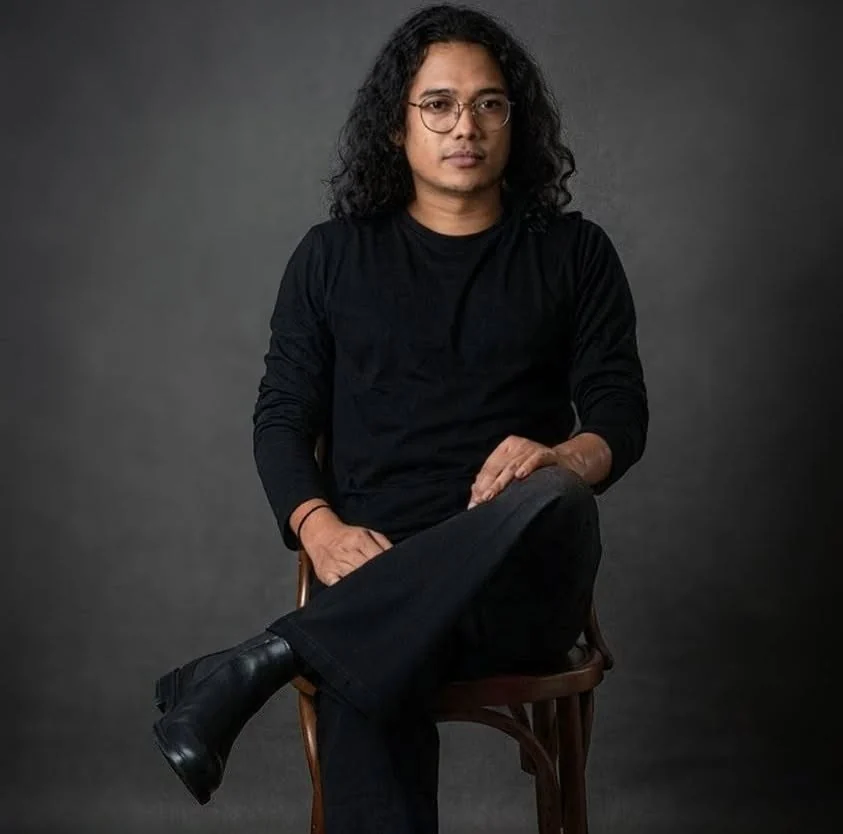
The 10-member committee, led by Emeritus Professor Manzoor Ahmed, submitted the draft to Education Adviser CR Abrar yesterday.
Committee member Md Mahboob Morshed, associate professor at Dhaka University’s Institute of Education and Research, presented the recommendations.
Morshed explained that public examinations should focus on core competencies rather than testing every subject.
“Subjects such as ICT, religion, physical education and the arts would be excluded from written public exams and assessed by schools through practical, hands-on evaluation.”
The report said this would ease “unnecessary academic pressure” on adolescents who currently sit for exams in all subjects, leaving limited scope to strengthen foundational skills in language and mathematics.
The committee also argued that shortening the public exam schedule would reduce prolonged school closures.
NO PUBLIC EXAMS AT CLASSES 5 AND 8
The report recommended that PSC and JSC exams in classes 5 and 8 remain abolished permanently and called the reintroduction of the Junior Scholarship Examination last year “unnecessary”, proposing scrapping it.
On structure, it proposed universal education up to class 12, defining classes 6 to 12 as the secondary level, and putting the school system from pre-primary to class 12 under a single ministry or authority.
It also recommended keeping the curriculum undivided up to class 10, calling the stream split at class 9 “not well-considered”, and said that should begin only at class 11.
The committee proposed amending the constitution to recognise education as a fundamental right, rather than only a principle of state policy, and enacting an Education Rights Act allowing citizens to take legal action if the state fails to provide quality education.
The proposals come against a field assessment that found learning gaps. The committee assessed 437 students from 10 schools, including institutions in char, haor and coastal areas. In mathematics, 77.13 percent of class 8 students and 65.42 percent of class 9 students scored below 33 percent; 71.4 percent failed overall. In English, 55.4 percent failed to achieve the passing grade.
ACADEMIC CALENDAR, CLASS DURATION
On the academic calendar, it called the January–December cycle a “colonial legacy” and proposed a September–June academic year, with the long vacation in July and August to reduce monsoon disruptions.
It also criticised the fixed 45-minute class as a “rigid routine” and suggested calculating total weekly instructional time per subject, allowing longer sessions, particularly for mathematics and science.
On governance, it recommended that MPs, upazila chairmen and elected public representatives should not serve as SMC presidents. Instead, presidents should have at least a university degree, with priority for genuine guardians and local educationists, citing political interference and irregularities.
It said the Directorate of Secondary and Higher Education is overstretched and proposed a separate Directorate of Secondary Education to oversee classes 6 to 12. It also suggested a Secondary Education Taskforce and an independent and permanent Education Commission to shield reforms from political change.
On teacher recruitment, it recommended a National Teaching Service Corps, modelled on the civil service. Meritorious students would enrol in a four-year integrated education honours programme after the Higher Secondary Certificate and upon completion, join the corps with pay, allowances and social status comparable to civil service cadres. They must serve at least five years in assigned institutions, particularly in rural areas.
Education Adviser Prof CR Abrar said the ministry would review the recommendations for policy and legal action.
He urged political parties to play an effective role not only in budget allocations but also in structural and institutional reforms.
First archived: 6 September 2026. This local copy does not depend on the source remaining online.