Health, education spending to reach 5% of GDP by 2031
Govt’s five-year plan sets targets for two key sectors
The government has set out a five-year plan to overhaul the education and health sectors, with a focus on improving learning and preparing students for jobs while widening access to primary and specialised healthcare.
By 2031, it aims to cut learning poverty from 50 percent to 22 percent, bring the secondary school dropout rate below 20 percent and reduce the share of healthcare costs paid directly by households to 50 percent of total health spending.
Learning poverty means a child’s inability to read and understand a simple text by the age of 10.
The Five-Year Strategic Framework for Reform and Development also targets public spending on each sector at 5 percent of GDP by fiscal 2030-31.
Based on the framework’s financing projections, Bangladesh’s nominal GDP in fiscal 2030-31 would be around Tk 112.75 lakh crore. At that level, 5 percent would amount to about Tk 5.64 lakh crore for each sector, taking their combined annual spending to around Tk 11.28 lakh crore.
By comparison, the fiscal 2026-27 budget allocates Tk 136,606 crore to education, which is equivalent to 2 percent of GDP, and Tk 69,409 crore to health, or around 1 percent. Together, the two sectors will receive Tk 206,015 crore.
If both 5 percent targets are met, their combined annual spending in fiscal 2030-31 would be about 5.5 times the current allocation.
Prepared by the General Economics Division of the Planning Commission, the framework covers the period from July 2026 to June 2031 and was approved by the National Economic Council on May 18. Its accompanying action matrix sets out commitments for six months, one year and five years.
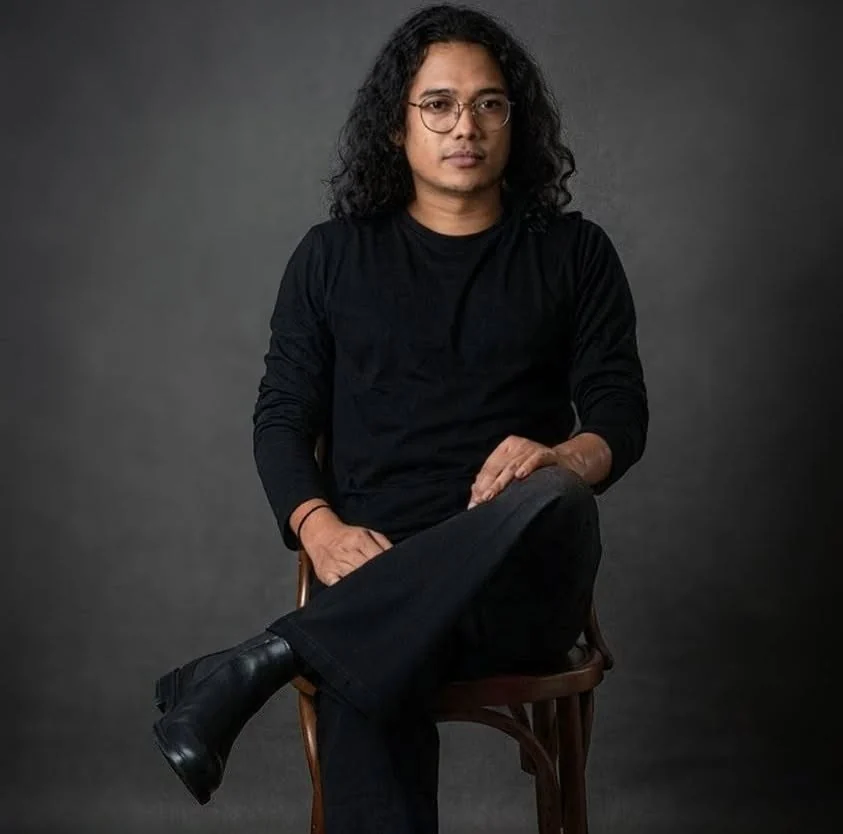
The key challenge is not simply raising allocations but specifying where and how the money would be spent, said Rashed Al Mahmud Titumir, adviser to the prime minister on finance and planning.
“In education, we have found that the necessary allocations were often not made where they were actually needed.”
Health allocations had also often remained unimplemented because earlier plans did not clearly specify areas of expenditure.
“This time, the plans are specific,” Titumir said.
He cited plans to increase the capacity of upazila hospitals from 50 to 100 beds, recruit doctors and nurses, and ensure medicine supplies as examples.
“Expenditure will increase, but an increase in expenditure is not a problem -- the size of our national budget is actually small compared with our needs,” he added.
Education: skills, learning, jobs
Within a year, the government plans to finalise an employment-oriented, skill- and value-based education policy and form a high-level independent Education Reform Commission.
The commission is expected to draw up a long-term roadmap to address structural weaknesses in the sector.
The action matrix also calls for arrangements within a year to provide free education up to postgraduate level for girls and boys and expand stipend programmes.
Technical education is a major part of the plan.
Within a year, curricula incorporating technical subjects will be prepared, courses selected according to local demand, teacher-training manuals developed, and technical laboratories established in secondary schools and colleges.
Over five years, every student is expected to acquire at least one technical or vocational trade.
The education chapter also targets raising the share of students in technical and vocational education and training from 14 percent to 27 percent by 2031.
Digital learning is another focus.
Within a year, the government plans to provide tablets to teachers, complete an education operating system covering learning materials, assessment, attendance and results, and establish smart classrooms in secondary schools and colleges.
Over five years, modern tablets and ICT training are to reach all teachers, while audiovisual and interactive learning systems are planned for every school.
Higher education reforms are aimed mainly at improving the transition to work.
The framework calls for Industry Liaison Cells and regular job fairs at public and private universities, while three- to six-month paid internships are to carry academic credit in undergraduate programmes.
For the National University, the one-year plan includes regional offices, revised curricula, digital infrastructure for eight regional branches, and compulsory ICT and soft-skill courses.
The longer-term goal is to end session jams through a two-year crash programme and align syllabuses with labour market demand.
The government also plans to launch a university-industry joint research laboratory and establish a Research and Innovation Centre in every university within a year.
For students seeking higher education abroad, the one-year plan proposes government-backed special loans through the Bangladesh Bank, an online loan portal and acceptance of degree certificates as collateral instead of mortgages or guarantees.
The employment link is central to the reforms, Titumir said.
“A person expects education to lead to employment,” he said, arguing that unregulated expansion and institutional weaknesses had contributed to educated unemployment.
Health: primary care, more workers
In health, the government plans to prepare development project proposals within a year to transform 1,313 sub-centres and 3,200 family welfare centres into primary healthcare units. It also plans to expand non-communicable disease corners to 446 locations.
Over five years, all 4,513 facilities are intended to operate as primary healthcare units. A broader roadmap envisages a unified primary healthcare system across all 64 districts and around 3,000 general-practitioner units.
The government also plans to recruit 2,394 senior staff nurses and 520 midwives against existing posts within a year. Over five years, it aims to create and fill another 30,000 to 40,000 nurse and midwife posts.
The wider five-year target is to recruit 100,000 new health workers nationwide and create around 15,000 jobs through medical universities in Rajshahi, Sylhet and Khulna.
Within a year, the government also plans to finalise a World Bank-supported project for 170 city health centres and establish ICU, CCU, dialysis and chemotherapy services in existing district hospitals.
The 170 centres are planned for Dhaka and Chattogram, while modern secondary healthcare units are to be established in every district over five years.
For emergency care, an ambulance tracking system is to be piloted in two districts and the 16263 call centre made operational for emergency dispatch, before the National Ambulance Pool and Emergency Service Network is expanded nationwide.
The framework also plans to evaluate a pilot involving 2.5 million e-health cards in Khulna before a phased nationwide rollout. It also aims to bring half the population under social health protection by 2031.
Overall, the government is strengthening budget and project monitoring through dashboards and making changes to project formulation, preparation and IMED oversight, Titumir said.
The country’s debt burden has constrained the state’s ability to provide adequate services to citizens, he added.
First archived: 6 September 2026. This local copy does not depend on the source remaining online.