Government to fix learning standards in pry schools
The government plans to introduce minimum learning standards for students from class one to class five across government primary, private, and English-medium schools, while allowing each stream to retain its distinct identity.
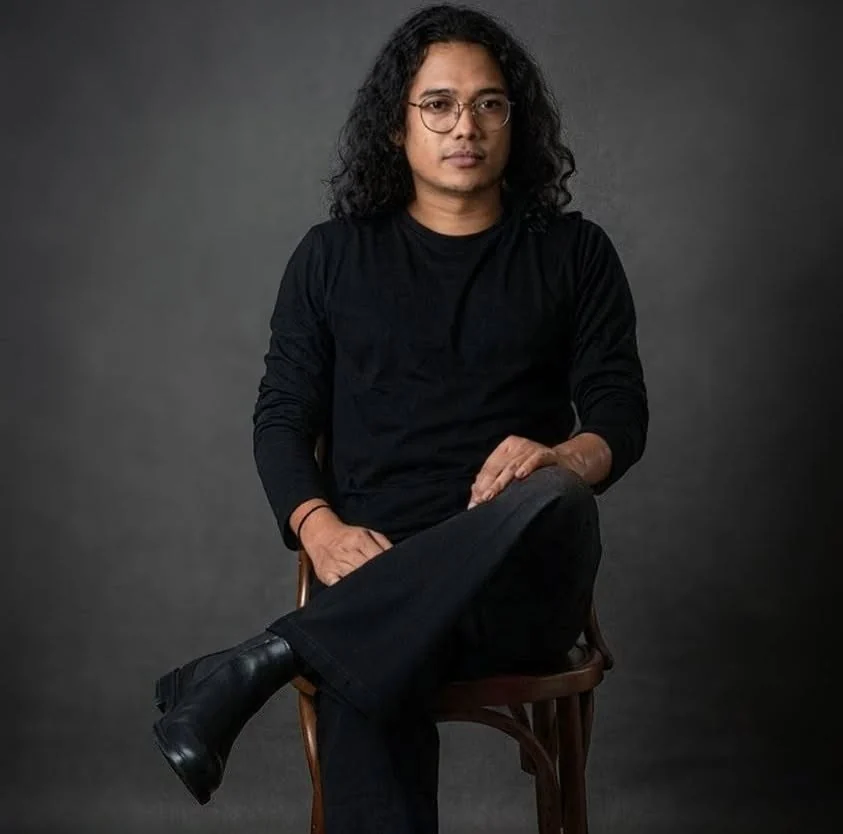
The government plans to introduce minimum learning standards for students from class one to class five across government primary, private, and English-medium schools, while allowing each stream to retain its distinct identity.
Under the framework, students across all these streams will receive the same lessons in core subjects, including Bangla, English, mathematics, civic education, sports, culture, and religion, which will be taught in progressively advanced levels as they move through classes.
In a recent interview with The Daily Star, Bobby Hajjaj, state minister for primary and mass education, said the move follows the prime minister’s directive to ensure that every student gets a guaranteed baseline of education, irrespective of the type of school.
“All students, regardless of how long they remain in schools, must attain a minimum standard of education,” he said, noting that the aim is to ensure that students do not miss out on basic education.
Ibtedayi and Qawmi madrasas will remain out of the initiative for the time being -- a decision he said reflects the fact that madrasas have distinct structures and it could take a few years to incorporate them into the framework.
Asked why the government is taking the initiative now, he said the fact that something has existed for years does not automatically make it good or bad.
“What exists will remain, but there will be standardisation.”
Speaking at a programme recently, the state minister mentioned that the country currently has 27 education streams. The streams include Bangla and English-medium schools, madrasas, and various training institutes.
Noting that all the streams, including English-medium schools, would continue to have their distinct features, Bobby told this newspaper, “The plan is to bring all streams into alignment, not to merge them.”
THE ALIGNMENT
The alignment will cover four areas: infrastructure, curriculum, teacher standards, and the academic calendar.
Policy decisions have already been made in all four areas, initially focusing on children aged four to 10, the state minister said.
The ministry aims to complete the first round of alignment within two years and bring all streams under some form of alignment within the BNP government’s five-year term.
The government is currently working out what level of Bangla an English-medium student needs to learn and vice versa, as well as the minimum level of mathematics needed to be taught across all streams.
Sports and cultural education will be compulsory for all. Religious education will remain core to madrasa education, while Bangla- and English-medium schools will be required to impart it to students to a certain level.
The state minister said a student who completes five years of schooling should attain a certain standard in basic subjects. Beyond the baseline, schools will be free to teach additional subjects as they see fit.
He stressed that the plan is to eventually bring all streams under basic alignment, but the process will proceed gradually and be based on consensus.
The ministry has initiated the process of forming expert committees to draft the standards and advisory panels comprising private school operators, teachers and other stakeholders to ensure their views are reflected.
ASSESSMENT AND TEACHER TRAINING
An assessment framework will be developed to determine whether students across streams are receiving the baseline education, Bobby said.
However, it is still at the planning stage, and no expert panel has yet been formed for this, he said.
While the country’s education system currently relies mainly on summative assessment, the government plans to shift gradually towards formative assessment over the next five years, keeping both approaches in the framework, he said.
Summative assessment refers to tests or exams held at the end of a term or year. Formative assessment is a continuing classroom-based process, using classwork, teacher observation and feedback to understand whether students are learning during a course.
On teacher training, Bobby said the ministry has already contacted several international organisations to get details of their training models. It is also exploring whether teacher training programmes can receive accreditation from recognised global bodies.
“Ideally, we want basic teacher training to be available not only for teachers of government primary schools but also for teachers across all schools and institutions.”
New policies may be introduced within months to motivate teachers and make their career structure clearer and more robust, he added.
First archived: 6 September 2026. This local copy does not depend on the source remaining online.